NANOTECHNOLOGY IN AGRICULTURE
Abstract
Nanotechnology refers to a filed whose theme is the control of matter on an atomic and molecular scale. Generally nanotechnology deals with structures 100 nanometers smaller, and involves developing materials or devices within that size. Today nanotechnology is being used in many areas such computer science,medicine and cosmetic manufacturing and food, as well as in agriculture. It is belived that as new nanotechnology products are developed will be used in agriculture areas which are in fertilizer, pesticide, sensors and packing materials. By using the slow release fertilize based on Nanoparticles will improves the productivity o f yield is about 20% while the efficiency of the fertilizer usage is about 25%.
Keywords: Nanoparticles, slow release fertilizer.
Introduction
Despite unprecedented government funding and public interest in nanotechnology, few can accurately define the scope, range or potential applications of this technology. One of the most pressing issues facing nanoscientists and technologists today is that of communicating with the non-scientific community. As a result of decades of speculation, a number of myths have grown up around the field, making it difficult for the general public, or indeed the business and financial communities, to understand what is a fundamental shift in the way we look at our interactions with the natural world. This article attempts to address some of these misconceptions, and explain why scientists, businesses and governments are spending large amounts of time and money on nanoscale research and development.
- What is nanotechnology?
Nanotechnology, shortened to "nanotech", is the study of the control of matter on an atomic and molecular scale. Generally nanotechnology deals with structures of the size 100 nanometers or smaller, and involves developing materials or devices within that size. Nanotechnology is very diverse, ranging from extensions of conventional device physics, to completely new approaches based upon molecular self-assembly, to developing new materials with dimensions on the nanoscale, even to speculation on whether we can directly control matter on the atomic scale.
Take a random selection of scientists, engineers, investors and the general public and ask them what nanotechnology is and you will receive a range of replies as broad as nanotechnology itself. For many scientists, it is nothing startlingly new; after all we have been working at the nanoscale for decades, through electron microscopy, scanning probe microscopies or simply growing and analysing thin films. For most other groups, however, nanotechnology means something far more ambitious, miniature submarines in the bloodstream, little cogs and gears made out of atoms, space elevators made of nanotubes, and the colonization of space. It is no wonder people often muddle up nanotechnology with science fiction. - What is the nanoscale?
Although a metre is defined by the International Standards Organization as `the length of the path travelled by light in vacuum during a time interval of 1/299 792 458 of a second' and a nanometre is by definition 10- 9 of a metre, this does not help scientists to communicate the nanoscale to non-scientists. It is in human nature to relate sizes by reference to everyday objects, and the commonest definition of nanotechnology is in relation to the width of a human hair.
Unfortunately, human hairs are highly variable, ranging from tens to hundreds of microns in diameter (10-6 of a metre), depending on the colour, type and the part of the body from which they are taken, so what is needed is a standard to which we can relate the nanoscale. Rather than asking anyone to imagine a millionth or a billionth of something, which few sane people can accomplish with ease, relating nanotechnology to atoms often makes the nanometre easier to imagine. While few non-scientists have a clear idea of how large an atom is, defining a nanometre as the size of 10 hydrogen, or 5 silicon atoms in a line is within the power of the human mind to grasp. The exact size of the atoms is less important than communicating the fact that nanotechnology is dealing with the smallest parts of matter that we can manipulate.
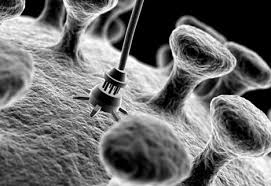

Nanotechnology in Agriculture
There are new challenges in this sector including a growing demand for healthy, safe food; an increasing risk of disease; and threats to agricultural and fishery production from changing weather patterns. Creating a bio economy is a challenging and complex process involving the convergence of different branches of science.
Nanotechnology has the potential to revolutionize the agricultural and food industry with new tools for the molecular treatment of diseases, rapid disease detection, enhancing the ability of plants to absorb nutrients etc. Smart sensors and smart delivery systems will help the agricultural industry combat viruses and other crop pathogens. In the near future nanostructured catalysts will be available which will increase the efficiency of pesticides and herbicides, allowing lower doses to be used.
Nanotechnology will also protect the environment indirectly through the use of alternative (renewable) energy supplies, filters or catalysts to reduce pollution and clean-up existing pollutants.
Agriculture (CEA). CEA is an advanced and intensive form of hydroponically-based
Agriculture. Plants are grown within a controlled environment so that horticultural practices can be optimized. The computerized system monitors and regulates localized environments such as fields of crops. CEA technology, as it exists today, provides an excellent platform for the introduction of nanotechnology to agriculture. With many of the monitoring and control systems already in place, nanotechnological devices for CEA that provide “scouting” capabilities could tremendously improve the grower’s ability to determine the best time of harvest for the crop, the vitality of the crop, and food security issues, such as microbial or chemical contamination.
Ø Precision Farming
Precision farming has been a long-desired goal to maximise output (i.e. crop yields) while minimis
Ø Smart Delivery Systems
The use of pesticides increased in the second half of the 20th century with DDT becoming one of the most effective and widespread throughout the world. However, many of these esticides, including DDT were later found to be highly toxic, affecting human and animal health and as a result whole ecosystems. As a consequence they were banned. To maintain crop yields, Integrated Pest Management systems, which mix traditional methods of crop rotation with biological pest control methods, are becoming popular and implemented in many countries, such as Tunisia and India. In the future, nanoscale devices with novel properties could be used to make agricultural systems “smart”. For example, devices could be used to identify plant health issues before these become visible to the farmer. Such devices may be capable of responding to different situations by taking appropriate remedial action. If not, they will alert the farmer to the problem. In this way, smart devices will act as both a preventive and an early warning system. Such devices could be used to deliver chemicals in a controlled and targeted manner in the same way as nanomedicine has implications for drug delivery in humans. Nanomedicine developments are now beginning to allow us to treat different diseases such as cancer in animals with high precision, and targeted delivery (to specific tissues and organs) has become highly successful. Technologies such as encapsulation and controlled release methods, have revolutionized the use of pesticides and herbicides. Many companies make for mulations which contain nanoparticles within the 100-250 nm size range that are able to dissolve in water more effectively than existing ones (thus increasing their activity). Other companies employ suspensions of nanoscale particles (nanoemulsions), which can be either water or oil-based and contain uniform suspensions of pesticidal or herbicidal nanoparticles in the range of 200- 400 nm. These can be easily incorporated in various media such as gels, creams, liquids etc, and have multiple applications for preventative measures, treatment or preservation of the harvested product.
Other Developments in the Agricultural Sector due to Nanotechnology
Agriculture is the backbone of most developing countries, with more than 60% of the population reliant on it for their livelihood. As well as developing improved systems for monitoring environmental conditions and delivering nutrients or pesticides as appropriate, nanotechnology can improve our understanding of the biology of different crops and thus potentially enhance yields or nutritional values. In addition, it can offer routes to added value crops or environmental remediation. Particle farming is one such example, which yields nanoparticles for industrial use by growing plants in defined soils.
For example, research has shown that alfalfa plants grown
rich soil, absorb gold nanoparticles through their roots and accumulate these in their tissues. The gold nanoparticles can be mechanically separated from the plant tissue following harvest. Nanotechnology can also be used to clean ground water.
Nanotechnology in the Food Industry
The impact of nanotechnology in the food industry has become more apparent over the last few years with the organization of various conferences dedicated to the topic, initiation of consortia for better and safe food, along with increased coverage in the media. Several companies which were hesitant about revealing their research programmes in nanofood, have now gone public announcing plans to improve existing products and develop new ones to maintain market dominance. The types of application include: smart packaging, on demand preservatives, and interactive foods. Building on the concept of “on-demand” food, the idea of interactive food is to allow consumers to modify food depending on their own nutritional needs or tastes. The concept is that thousands of nanocapsules containing flavour or colour enhancers, or added nutritional elements (such as vitamins), would remain dormant in the food and only be released when triggered by the consumer.24 Most of the food giants including Nestle, Kraft, Heinz, and Unilever support specific research programmes to capture a share of the nanofood market in the next decade. The definition of nanofood is that nanotechnology techniques or tools are used during cultivation, production, processing, or packaging of the food. It does not mean atomically modified food or food produced by nanomachines. Although there are ambitious thoughts of creating molecular food using nanomachines, this is unrealistic in the foreseeable future. Instead nanotechnologists are more optimistic about the potential to change the existing system of food processing and to ensure the safety of food products, creating a healthy food culture. They are also hopeful of enhancing the nutritional quality of food through selected additives and improvements to the way the body digests and absorbs food. Although some of these goals are further away, the food packaging industry already incorporates nanotechnology in products.
Food Processing
Nanotechnology is already making an impact on the development of functional or interactive foods, which respond to the body’s requirements and can deliver nutrients more efficiently. Various research groups are also working to develop new “on demand” foods, which will remain dormant in the body and deliver nutrients to cells when needed. A key element in this sector is the development of nanocapsules that can be incorporated into food to deliver nutrients. Other developments in food processing include the addition of nanoparticles to existing foods to enable increased absorption of nutrients. One of the leading bakeries in Western Australia has been successful in incorporating nanocapsules containing tuna fish oil (a source of omega 3 fatty acids) in their top selling product “Tip-Top” Up bread. The microcapsules are designed to break open only when they have reached the stomach, thus avoiding the unpleasant taste of the fish oil. Nutraceuticals that have been incorporated in the carriers include lycopene, beta-carotene, lutein, phytosterols, CoQ10 and DHA/EPA. The Nutralease particles allow these compounds to enter the bloodstream from the gut more easily, thus increasing their bioavailability. These will allow the consumer to choose between different flavours and colours. The consortium also has plans to develop smart foods which will release nutrients in response to deficiencies detected by nanosensors, and nanocapsules which will be ingested with food, but remain dormant until activated. All these new developments will make the concept of super foodstuffs a reality, and these are expected to offer many different potential benefits
including increased energy, improved cognitive functions, better immune function, and antiaging benefits. Nanotechnology has already been used in the cosmetics industry to produce transparent creams. Royal BodyCare, a company utilizing nanotechnology in nutritional sciences, has marketed a new product calledNanoCeuticals which is a colloid (or emulsion) of particles of less than 5 nm in diameter.
Products
A major problem in food science is determining and developing an effective packaging material. Using nanoparticle technology, Bayer has developed an even more airtight plastic packaging that will keep food fresher and longer than their previous plastics and the plastics of their competitors. Researchers at Bayer Polymers refer to this new plastic as a “hybrid system” as it is enriched with an enormous number of silicate nanoparticles. When this plastic is processed into a thin film and wrapped over food, it does a better job than previous plastics of preventing food from going bad on the shelf and it helps prevent odors from one food mixing with another.
What is most problematic for food packaging engineers is oxygen because it spoils the fat in meat and cheese and turns them pale. Due to the nature of the nanoparticles in Durethan, Bayer’s new plastic material, air cannot penetrate it like other conventional plastics (Figure 3). The embedded particles have a maze like arrangement in the plastic, acting like barriers, which makes it difficult for gases, like oxygen, to pass through the packaging. They actually increase the distance the gas molecules have to travel by causing those molecules to zigzag around the silicate plates in effect increasing the amount of time it will take for the molecules to completely penetrate (see figure 4)Impregnating the polyamide with the layered silicate platelets is not as simple as just blending them together. A few technical tricks are needed to ensure that there is uniform blending of the polyamide and the layered silicates. Once the plastic goes through polymerization, the viscous polymer that forms scatters the individual platelets, but in order for the caprolactam to diffuse the platelets, the silicates have to be chemically modified. That is the metal ions that form the bonds between the platelets have to be replaced by an organic acid, which increases the distance between the individual silicate stacks once the mixing is done, the silicate stacks are broken down almost completely and the individual platelets are distributed uniformly throughout the polyamide. When the plastic is extruded into a film, the platelets orient themselves parallel to the surface, allowing minimum penetration of oxygen through the material. Adding to this protection is the dimension of the silicate particles themselves. Each platelet is only a few nanometers thick but is about 1,000 micrometers long, which means the gases will have to go a long way around the platelets while the overall material remains quite flexible. This show excellent promise to the food industry, as it will allow retailers to store and preserve the quality of meats, and other food items that expire easily, for a longer period of time.
Conclusions
Globally, many countries have identified the potential of nanotechnology in the agrifood sector and are investing a significant amount in it. The United States Department of Agriculture (USDA) has set out ambitious plans to be achieved in the short, medium and long term, and aims to discover novel phenomena, processes and tools to address challenges faced by the agricultural sector. Equal importance has been given to the societal issues associated with nanotechnology and to improve public awareness. The UK’s Food Standards Agency (FSA) has commissioned studies to assess new and potential applications of nanotechnology in food, especially on packaging. At the same time more money has been given by other Government departments towards research and development which includes the development of functional food, nutrient delivery systems and methods for optimizing food appearance, such as colour, flavour and consistency.
REFERNECES:
http://www.iop.org/EJ/abstract
http://www.ipicex.com/docs/oral/Session%202C%20Saifollah%20et%20al.pdf
http://www.nanoforum.org/dateien/temp/nanotechnology%20in%20agriculture%20and%20food.pdf
http://www.foodscience.afisc.csiro.au/foodfacts/foodfacts11-fishoil.htm
http://www.nutralease.com/technology.asp
http://www.biodeliverysciences.com/bioralnutrients.html
http://www.tahan.com/charlie/nanosociety/course201/nanos/AJ.pdf

